Hawkmen Insights
Business AcquisitionsHow Lenders Look at a Laundromat Acquisition
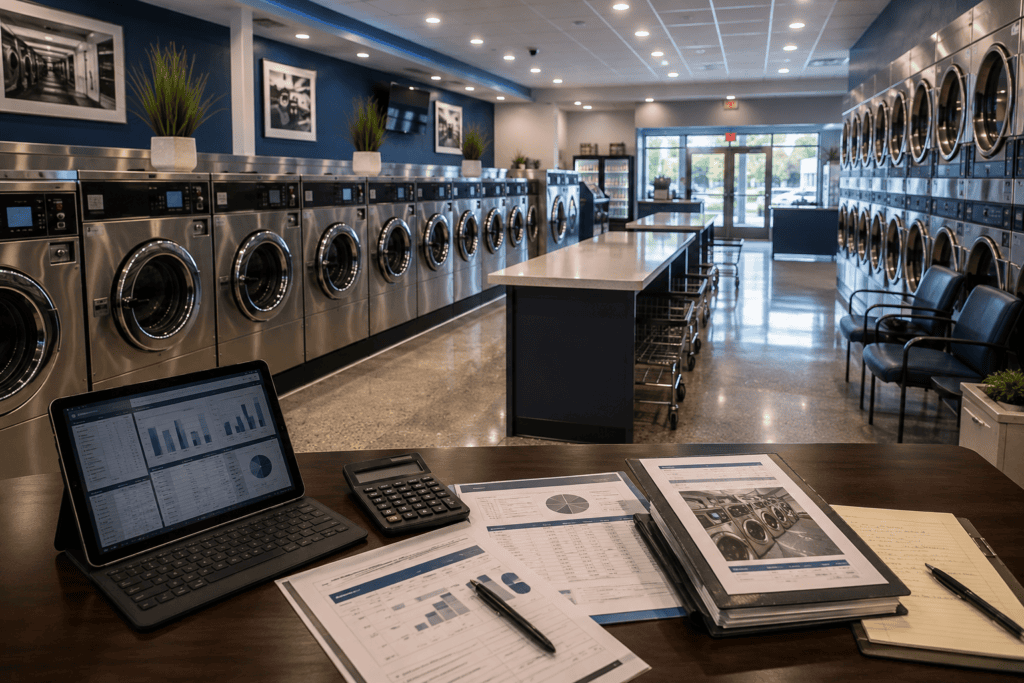
Laundromat acquisitions can attract buyers because they provide an essential service, may produce recurring revenue, and can operate with relatively limited staffing. From a lender's perspective, however, the opportunity must still be verified. A seller's stated cash flow, machine count, or reputation is not enough on its own.
How Lenders Verify Laundromat Revenue
Revenue verification is usually the first major issue. Laundromats may receive income through coins, cards, mobile payment systems, vending, wash-dry-fold service, pickup and delivery, and commercial accounts. The lender will want to understand how each revenue stream is recorded and whether the reported sales reconcile with bank deposits, tax returns, payment-system reports, utility usage, and operating statements.
Cash-heavy operations require careful documentation. A business can be profitable and still be difficult to finance if the income cannot be verified. Buyers should request several years of tax returns and financial statements, current year-to-date performance, bank statements, card-system reports, and any records that explain cash collection procedures. Unreported or unsupported income should not be treated as dependable underwriting income.
Why Lease Control Can Make or Break the Deal
The lease is another critical factor. A strong business located in a leased space may be vulnerable if the remaining term is short, renewal options are unclear, rent can increase sharply, or the landlord will not approve assignment. Lenders generally want enough lease control to support the financing term and the borrower's investment. The buyer should review base rent, common-area charges, repair obligations, assignment provisions, renewal options, exclusivity, and restrictions on equipment or alterations.
Utilities can materially affect profitability. Water, sewer, gas, and electricity costs should be reviewed over time, not only for one month. A lender or buyer may compare utility usage with reported sales to test whether the operating story is reasonable. Sudden changes can signal pricing issues, equipment inefficiency, leaks, occupancy changes, or incomplete records.
Equipment condition also matters. The age, brand, capacity, ownership, maintenance history, and remaining useful life of washers, dryers, payment systems, boilers, water heaters, and related equipment affect both value and future capital needs. If the buyer must replace a large portion of the equipment soon after closing, the transaction may need additional cash, equipment financing, or a lower purchase price.
Competition and location remain important. A laundromat may benefit from dense housing, limited in-unit laundry, strong visibility, parking, and convenient access. The buyer should identify nearby competitors, pricing, equipment quality, operating hours, and customer reviews. A lender may not conduct a full market study for every request, but the file should explain why the business is likely to retain customers.
The purchase structure should separate real estate, business value, equipment, inventory, and working capital. If the building is included, the transaction may involve both commercial real estate and business acquisition underwriting. If the business is leased, the lender will focus more heavily on cash flow, lease control, equipment, and borrower experience.
Borrower experience can strengthen the file. Direct laundromat experience is useful, but relevant backgrounds in operations, retail, property management, maintenance, finance, or customer service may also support the request. The buyer should provide a realistic operating plan, staffing model, repair strategy, and explanation of any planned service expansion.
A lender will also consider the buyer's equity contribution and post-closing liquidity. The purchase price is only part of the cash requirement. Closing costs, deposits, repairs, inventory, marketing, payroll, and working capital must be considered. A buyer who uses all available funds at closing may have difficulty handling normal surprises.
The strongest laundromat acquisition files combine verifiable cash flow, secure lease control, understandable equipment needs, a credible operating plan, and a realistic capital structure. The opportunity should be evaluated as both a business and an operating system, not simply as a room full of machines.
Related insights


Hawkmen Enterprises is a commercial capital advisory firm and is not a lender. Financing availability, terms, leverage, rates, and approval depend on the borrower, transaction, documentation, lender requirements, and underwriting.