Hawkmen Enterprises
Multifamily 5+ Unit Capital Advisory

Financing strategy for multifamily acquisitions, refinances and value-add plans.

Hawkmen Enterprises helps gas station and convenience store buyers, owners and operators evaluate the business, prepare the file, improve capital readiness and pursue financing with capital sources whose programs may align with the property, fuel operation, store, borrower and transaction.

AcquisitionRenovation and value-addRefinanceExpansionRepositioning
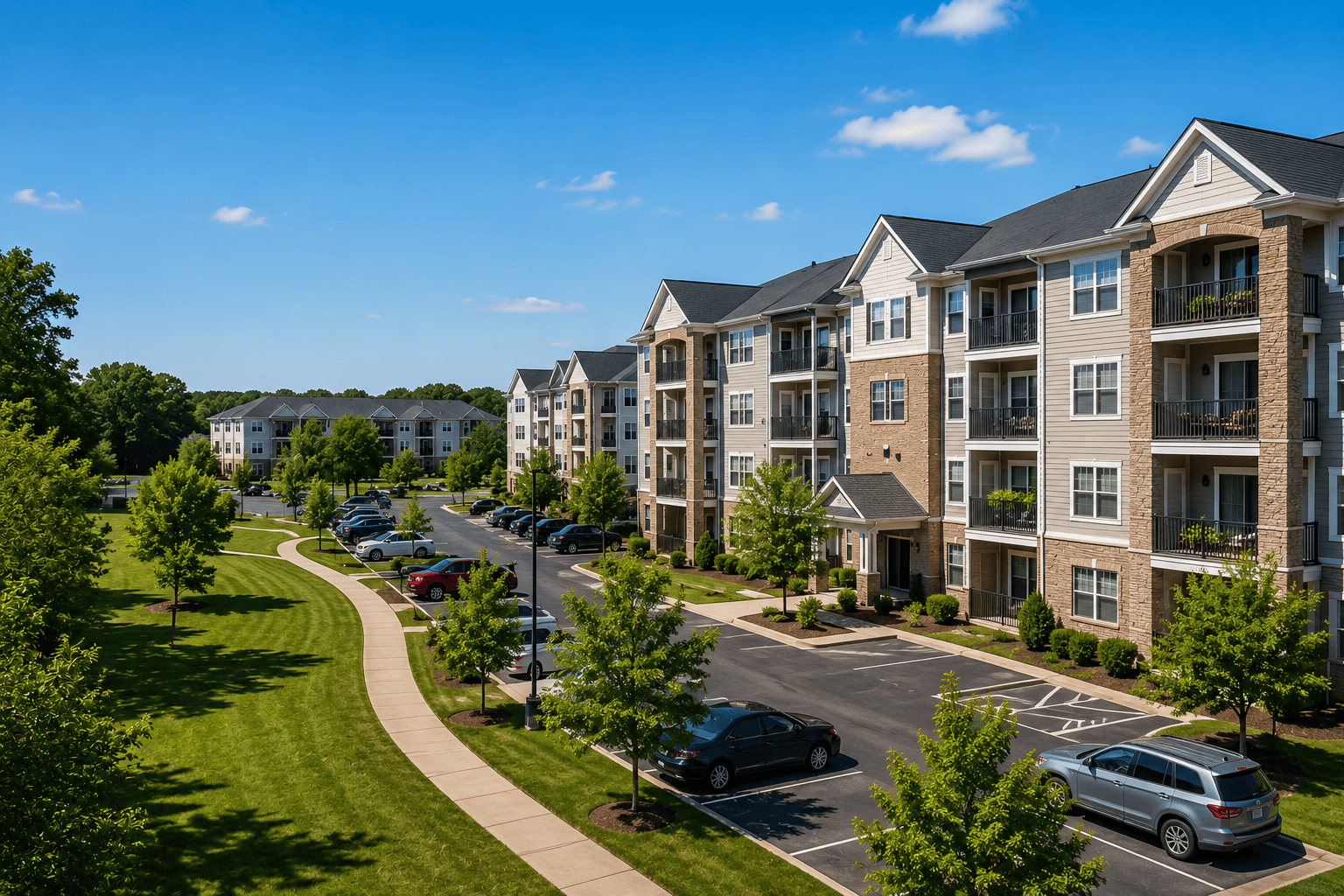
Professionally maintained multifamily apartment property with attractive buildings, clean common areas and organized parking
Multifamily financing combines real estate value, rent collections, occupancy, operating expenses, property condition, market demand and borrower capacity.
Transaction paths

Common multifamily financing scenarios

Multifamily transactions may involve stabilized apartment properties, below-market rents, deferred maintenance, renovation plans, occupancy recovery, management transitions, unit upgrades, bridge-to-stabilization strategies or long-term refinancing.

01

Apartment property acquisition

Financing for the purchase of an apartment property with five or more units based on the rent roll, collections, operating history, property condition, borrower strength and the proposed ownership plan.
02

Renovation and value-add

Capital for unit renovations, roofs, mechanical systems, common areas, security, parking, deferred maintenance, utility improvements or other work intended to improve operations and net operating income.

03

Refinance

Replacing existing debt, restructuring obligations, accessing equity or pursuing improved cash flow after stronger fuel volume, parking utilization, travel-center sales or property improvements.

04

Repositioning or stabilization

Financing an occupancy recovery, management transition, rent repositioning, unit-mix adjustment, affordable-housing strategy or turnaround plan for an underperforming property.

Underwriting priorities

What capital providers may evaluate

Multifamily underwriting combines property value, rent roll quality, collections, physical and economic occupancy, operating expenses, management quality, market demand and borrower capacity. Unit count alone does not tell the complete story.

Rent and collection performance

  • Current rent roll and lease status
  • In-place rents and monthly collections
  • Market rents and loss-to-lease
  • Concessions, delinquency and bad debt

Operating performance

  • Rental, utility and other income
  • Payroll, repairs and operating expenses
  • Parking, laundry and other income
  • Management systems and collection controls

Property condition and capital needs

  • Unit interiors, roofs and mechanical systems
  • Life-safety, accessibility and code items
  • Plumbing, electrical and utility condition
  • Deferred maintenance and capital plan

Borrower and market strength

  • Liquidity and post-closing reserves
  • Relevant retail or fuel experience
  • Employment, schools and neighborhood demand
  • Competing supply, new construction and market rents
Multifamily operator reviewing rent roll, collections, occupancy, operating statements and renovation plans in a professional office
Capital providers may compare physical occupancy, economic occupancy, collections, market rents, operating expenses and renovation needs.
Multifamily operating metrics

The operating story behind the numbers

No single ratio determines whether a laundromat transaction will receive financing. Capital providers generally review how rent collections, physical and economic occupancy, net operating income, expenses, renovation obligations, management quality and borrower support work together.

Physical and economic occupancy quality

Physical and economic occupancy

Physical occupancy shows how many units are occupied. Economic occupancy reflects the income actually collected after concessions, delinquency, vacancy and bad debt.

Rent performance

In-place rent versus market rent

Unit interiors, roofs and mechanical systemss materially affect sustainable cash flow and may reveal inefficient or aging equipment.

Repayment ability

Debt-service coverage

Cash flow must support proposed debt after adjustments for normalized payroll, inventory, maintenance, management, reserves and underwriting assumptions.

Income efficiency

Net operating income and expense efficiency

Rental income, collections, payroll, utilities, management, repairs, insurance, taxes and reserves affect sustainable net operating income.

Capital readiness

High physical occupancy does not automatically create a lender-ready file.

Weak collections, concessions, delinquency, inconsistent reporting, deferred maintenance, unsupported rent growth or major renovation needs can reduce financing options.

Document readiness

Prepare the multifamily financing file

Documentation requirements vary by capital source and transaction. These materials commonly help establish the property’s rent roll, collection history, operating performance, management quality, renovation requirements and physical condition.
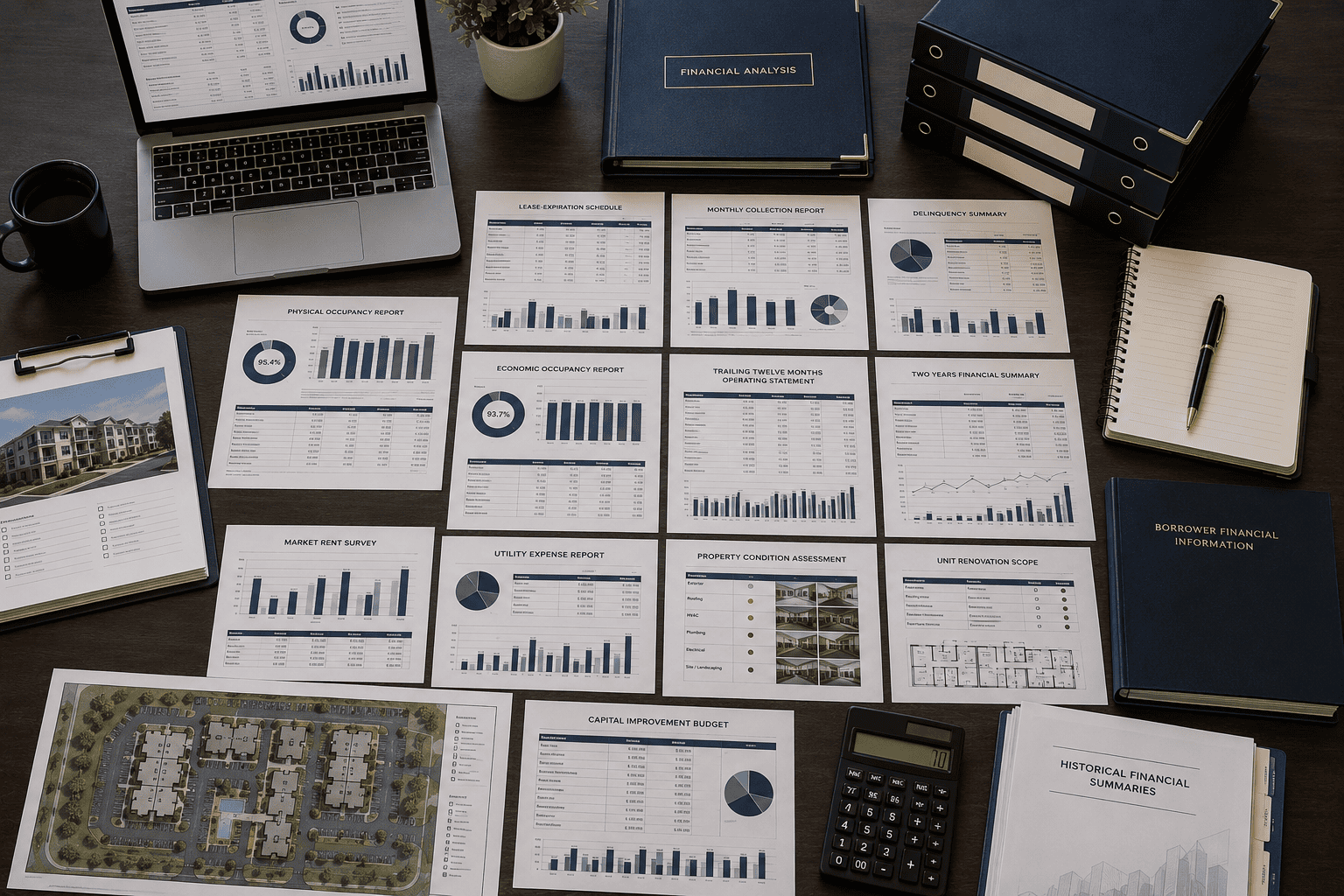
Organized multifamily financing documents, rent roll, collection reports, operating statements, renovation budget and property records on a conference table
A complete financing file helps separate rental performance, collections, operating expenses, renovation obligations and property condition.
  • Trailing 12-month profit-and-loss statement
  • Two to three years of business tax returns when available
  • Business bank statements and merchant-processing reports
  • Current rent roll and lease-expiration schedule
  • Monthly collections, delinquency and bad-debt reports
  • Property-management agreement or operating plan
  • Market-rent survey and comparable-property information
  • Property-condition, life-safety and accessibility reports
  • Unit inventory, capital-needs schedule and renovation plan
  • Purchase agreement, borrower liquidity and operating plan
Common friction points

Why multifamily financing requests encounter difficulty

A well-located apartment property can still present underwriting concerns when collections, occupancy, reporting, management, rent assumptions or property condition do not support the requested financing.

Collections do not support the rent roll

The rent roll, bank deposits, operating statements and delinquency reports may tell different stories when collections are weak or reporting is incomplete.

Physical and economic occupancy hides weak rate performance

A full property may still produce weak cash flow when concessions, delinquency, bad debt, unpaid utilities or below-market rents reduce effective income.

Existing leases and regulations limit the business plan

Lease terms, tenant protections, affordability restrictions, local regulations or management agreements may affect timing, rent growth and operating flexibility.

Renovation needs are understated

Unit interiors, roofs, mechanical systems, plumbing, electrical, life-safety, accessibility, parking and common-area needs can materially increase the capital required after closing.

Rent-growth assumptions are unsupported

Projected rent increases, reduced vacancy, lower expenses or renovated-unit premiums require credible market, tenant and operating support.

Insufficient liquidity

The equity contribution is only part of the capital requirement. Closing costs, repairs, equipment replacement, working capital and reserves may also require documented funds.

Hawkmen process

From transaction review to capital strategy

Hawkmen does not make credit decisions. We help you improve the financing presentation and pursue appropriate capital relationships.

Review

We examine the property, rent roll, collections, market, management, renovation, borrower and transaction information, requested financing and available documentation.

Identify

We identify missing information, likely underwriting concerns and material strengths within the transaction.

Position

We help organize the financing narrative, supporting documents and transaction structure.

Pursue

When the file is ready, we pursue financing relationships whose stated programs may align with the complete transaction.
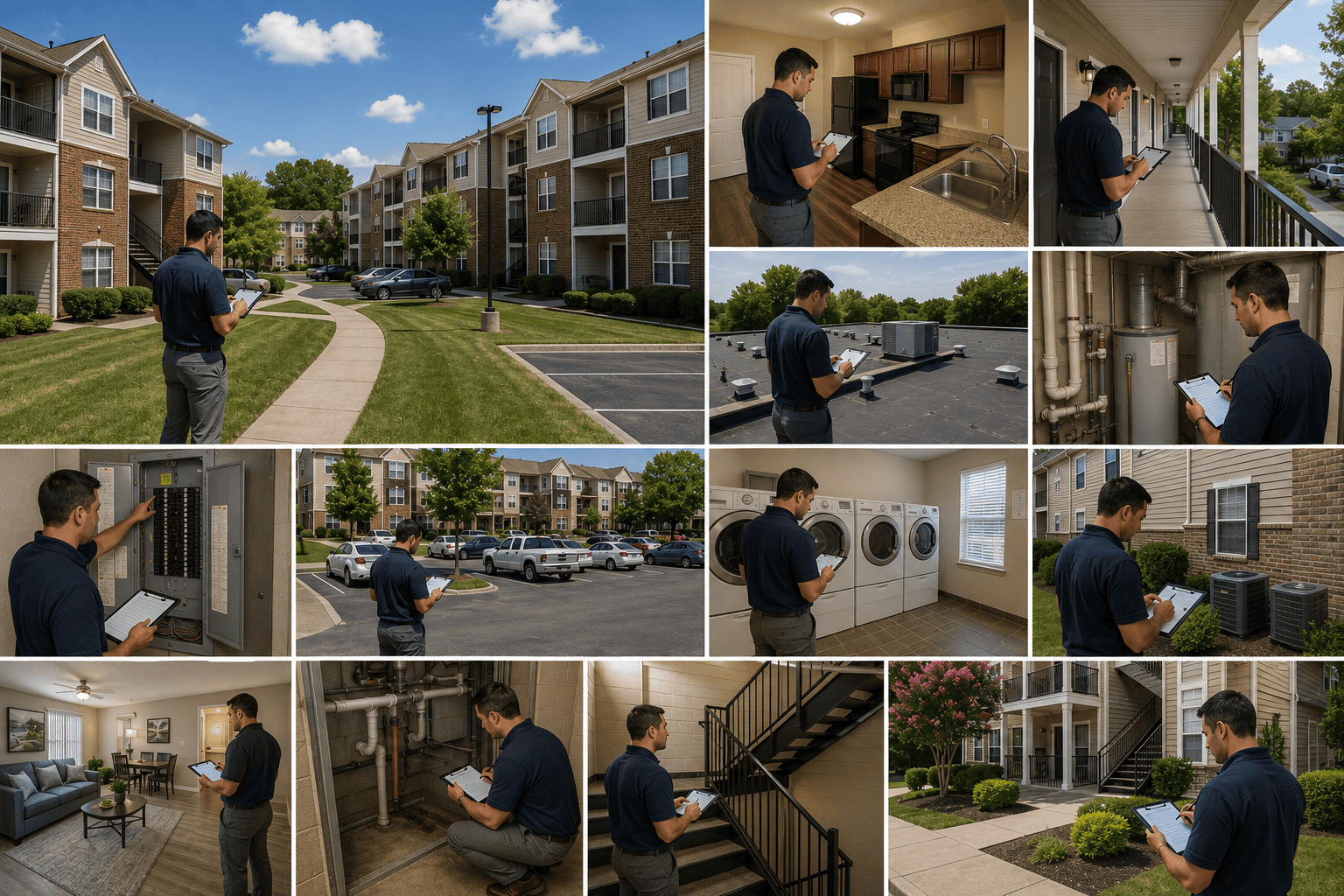
Professional investor inspecting apartment units, common areas, building systems and exterior condition at a multifamily property
Opportunity discovery and deal analysis should lead into one organized capital strategy.
Tools and opportunities

Evaluate the property or discover your next opportunity

Use Hawkmen’s developing platform to organize a transaction, identify potential concerns and connect opportunity discovery with capital preparation.

Hawkmen Deal Intelligence

Analyze a multifamily transaction before you move forward.

Organize property, rent roll, collections, market, management, renovation, borrower and transaction information. Identify missing data, review key metrics and surface issues that may affect the next financing step.

  • Structured deal intake
  • Physical and economic occupancy, ADR and RevPAR review
  • Property-condition and renovation review
  • Underwriting concern flags
  • Advisor-review pathway
Multifamily Opportunities

Find opportunities that align with your acquisition criteria.

Submit your buy box so Hawkmen can organize and filter relevant multifamily opportunities as the curated deal platform develops.

  • Market and price criteria
  • Market, unit count, pricing and property preferences
  • Location, occupancy, rent and renovation criteria
  • Curated opportunity alerts
  • Deal Intelligence integration
Frequently asked questions

Multifamily financing questions

Capital providers commonly review the current rent roll, trailing operating statements, collections, delinquency, physical and economic occupancy, lease expirations, market rents, property condition, renovation requirements, borrower liquidity, experience and the proposed transaction structure. Requirements vary by lender and deal.
Physical and economic occupancy shows room-night demand, average daily rate shows pricing, and RevPAR combines both into one revenue-efficiency measure. Reviewing all three helps explain whether performance comes from strong demand, strong rates or discounting.
Some financing structures may include unit renovations, roofs, mechanical systems, plumbing, electrical, life-safety work, accessibility improvements, parking, common areas or other capital improvements when supported by detailed costs, timing, borrower equity and a credible operating plan.
No. Hawkmen Enterprises is a commercial capital advisory firm and is not a lender. Hawkmen helps clients evaluate, prepare, position and pursue financing opportunities. The applicable capital provider makes all underwriting and credit decisions.
Stabilized properties are generally evaluated on current collections, occupancy and sustainable net operating income. Value-add properties also require a credible renovation budget, lease-up plan, market support, reserves and a clear separation between current and projected performance.
Begin with the 60-Second Funding Snapshot. It is designed to help identify whether you should gather more information, complete a readiness process, use Deal Intelligence or submit the full transaction for review.
Choose your next step

Move the multifamily transaction forward with better information.

Start with a quick Snapshot, analyze the transaction through Hawkmen Deal Intelligence or submit the complete file for capital advisory review.

Hawkmen Enterprises is a commercial capital advisory firm and is not a lender. Financing availability, terms, leverage, rates and approval depend on the borrower, transaction, documentation, capital-provider requirements and underwriting.